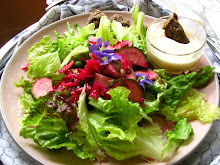
Amaranth greens are the leafy part of the plant that eventually will grow seed heads and produce amaranth grain, an ancheint grain of the middle-east. Highly nutritious!
I'v been getting mine through Freshconnectkc.com. They come as part of my weekly delivery of organic goodies.
(Thankfully, it keeps well, up-right in the fridge in a small bucket of clean-source water.) If any of the leaves start to wilt, I trim them and put them in the dehydrator to use in place of dried parsley.
~~~~~~~~~~~~~~~~~~~~~~~~~~~~~~~~~~~~~~~~~~~~
Here's What Wikipedia has to say about the nutritional value and traditional uses:
Because of its importance as a symbol of indigenous culture, and because it is very palatable, easy to cook, and its protein particularly well suited to human nutritional needs, interest in grain amaranth (especially A. cruentus and A. hypochondriacus) revived in the 1970s. It was recovered in Mexico from wild varieties and is now commercially cultivated. It is a popular snack sold in Mexico City and other parts of Mexico, sometimes mixed with chocolate orpuffed rice, and its use has spread to Europe and parts of North America. Amaranth and quinoa are called pseudograins because of their flavor and cooking similarities to grains. These are dicot plant seeds, and both contain exceptionally complete protein for plant sources. Besides protein, amaranth grain provides a good source ofdietary fiber and dietary minerals such as iron, magnesium, phosphorus, copper, and especially manganese. It has been claimed to be beneficial in preventing greying of hair. ~~~~~~~~~~~~~~~~~~~~~~~~~~~~~~~~~~~~
Caution: Only use a large doses of Amaranth if you have been glutten free for 24 to 48 hours. Do not consume starches in combination with Amaranth or spinach if you suffer from any form of arthritus, fibermialgia or sensitivities to night-shades. If you welcome baby spinach, beet greens, chard, kale and chard, you may eat this herb/green in abundance, including juicing it!
I found I like it best wilted with traditional Indian or South/Central American seasoning. It holds up well with spicy foods. It has a sweet stem and basil-spinach-like larger leaves. The small tender leaves and frilly tops are also sweet with a hint of wheat-grass smell and taste. Don't panic if you hate wheat grass! The sweet-green-lawn-taste and aroma completely change after wilting or marinating. It's an earthy flavor. If you like beet greens, you'll love it.
Here's what I've been doing with it:
- Use in place of spinach in blended soups, Indian and Italian-style recipes and in soup broth.
- Use stems to add flavor and "green-power" to juices. (Save the naked stems for juicing by storing up-right in a small bucket with 2 inches of clean-source water). I used a ceterfudge juicer. Yummy with pineapple core, green apple and celery! Great with cucumber lemon juice in the Vitamix. Interesting that although the stems are mostly green, it added a pink tint to the juices. Must be that high-antioxident content!))
- For a medicinal dose, place fresh stems and leaves in Vitamix with coconut water or clean source water and a pinch of Himalayan pink salt. Emasserate, strain and chill the juice. Add lemon or lime, if needed. (The result was a milder, more pleasant version of wheat-grass).
- Dehydrate and crumble leaves into salad dressings and soups.
- Saute whole leaves with onions, garlic and cocnut oil with or without curry and serve with brown rice.
- Here's several recipes we've enjoyed this week: Added it traditional to Dhal. Commonly, in recipes I find printed, this dish would call for spinach. I've made it it with spinach many times and enjoy that. The amaranth brought a whole new taste to the dish and ITS REALLY GOOD. (I used the leaves from three or four 12-inch stalks. After tasting it, I thought it would have been nice to add twice as much. The leaves wilt and become richly-buttery flavored.) So, Here is my NEW FAVORITE DAHL recipe!
Equipment: Glass, ceramic or earthen-ware bowel for soaking lentils, a good knife, cutting surface and stainless steal stock pot.
Ingredients:
- 4 cups dry red lentils (Make sure they are organic and not "enhanced" with synthetic or veggie dies.) The samller and brighter orange, the better!
- prepared Indian green chili paste or freshly minced mixed hot peppers
- diced or "chunked" onion (to preference)
- 2-5 cloves of garlic, pressed
- 1/2 tsp of Himalayan pink salt
- 1 or 2 tsps ground cumin, to taste
- 1 medium to large black cardemon pod, left whole*
- 2 TBS coconut oil
* Everybody asks, "What makes my dahl so exceptionally good?" It's the cardemon! (No, not the demon in your car. It's a seasoning found in Indian and Middle-eastern markets and some specialty spice shops. Ask for organic, as always.) Also, be sure and remove it before serving! It's a big surprise if you accidentally bite into it.
Garnish with:
- Freshly rough-chopped red tomato (up to 2 cups or as many ripe ones as you have on hand)
- Freshly stripped amaranth leaves, rough-chop as many as you like! (reserve stems for juicing and frilly tops for garnishing)
- a pinch of ceyanne pepper, if needed
- butter, ghee, olive oil or Earth Balance Soy-free Buttery Spread
Instructions:
1 day before or the morning of your meal: Soak or sprout red lentils, 8 to 24 hours.
1 Hour prior to meal:
Wash away extra starch from sprouted lentils in cool water. drain and reserve damp lentils.
Chop or chunk onion, sprinkle with salt, reserve. (You will add other ingredients to the pot before onions, water and lentils.)
Heat coconut oil in a 6-quart stainless-steel stock pot. Add desired amount of prepared Indian green chili paste or freshly minced mixed hot peppers and saute on medium for a minute or two (1 to 2 TBSs will make a mild to medium spicy Dhal. Remember, the garlic will "heat it up" too. Do not over do it. You can always add cyanne later, it you want it spicier. Also, left-overs become "hotter" and can be eaten as a cold side-dish.)
Reduce heat to simmer after aromas form in the oil
Add chopped or chunked salted onion, whole cardimon pod and pressed garlic. Add more coconut oil, if needed to keep garlic from sticking.
On low heat, sweat the aromatics with a lid on for 3 to 5 minutes, or longer, if desired. (I like the onion to be soft but not squishy after it's cooked all the way, so I chunk it and sweat it for a short time (5 - 10 minutes), knowing cooking it with the lentils and water will soften it further.)
Wash away extra starch from sprouted lentils in cool water and drain them before adding to cooking pot. Add enough fresh clean-source water to cover, increase heat to medium, stir well. Bring to a bubbling slurry on medium, no need to boil. Stir and cover, reduce heat to low for 10 to 15 minutes. Open lid from time to time to check if more water is needed and stir to assure that lentils do not stick to the bottom. Also open lid and stir again before removing from heat.
Chop the tomatoes and amaranth greens while the lentils cook.
Off the heart source, add: chopped tomatoes, greens and buttery oil of choice.
Serve warm or allow to cool, serve at room temp or refrigerate.
Spicy Marinated Amaranth
Great chilled or room temp. "Develops" the longer it is refrigerated. Makes a great raw-"pizza" topping. Sir into cooked brown rice, baby limas or quinoa to give your "standard" a whole new out-look! We keep it in the fridge as a condiment.
Equipment: Good knife, cutting surface and large mixing bowel, glass refrigerator dish.
Ingredients:
1 pound amaranth tops
1 teaspoon ground cumin
1/2 teaspoon ground coriander
1/4 teaspoon ground cloves
1/2 teaspoon ground cardamon
2 tablespoons hemp seed or olive oil
1 to 3 garlic clove, minced
1 teaspoon minced fresh ginger
1 small jalapeno pepper, seeded and minced (optional)
1 teaspoon Himalayan pink salt
1 tablespoon lime juice
Instructions:
Strip leaves from amaranth stems (reserve stems for juicing)
Rough chop larger leaves, keep smaller ones whole. Fill a large mixing bowel.
Add seasonings and oil and massage with hands or stir well, mashing with a wooden spoon. Transfer to a glass dish with a cover prior to placing it in the fridge. It will reduce in bulk as you massage and marinate it.
Options: Mix with other greens. Mix with thinly-sliced sweet onions. Leave the oil out and dehydrate for a dry seasoning suitable for a salad dressing mix.