Sprouting the garbanzo beans increases nutrient content and improves flavor. I have not arrived at a raw hummus that is as satisfying, so I'm keeping this as one of my cooked foods. This is true of most beans. I sprout, then cook them. Raw beans are difficult to digest.
I always eat cooked foods, including hummus, with plenty of fresh vegetables to aid in digestion. Sometimes, I'll eat kraut and/or a digestive enzyme supplement as well.
Endorphins are Everything: Mood-enhancing, immune supporting and energizing! It's simple to make sure you get enough endorphins:
Step two: Repeat step one. Celebrate that you can enjoy foods, cooked and raw, and you can start now. That's it.
Step three: "But what about this, but what about that, but..." says your busy mind. Watch that go past and repeat step one. some coked foods in the diet have proven to increase vitality in most clients I have consulted with. I recommend that you periodically, go 100% raw for a few weeks or days --whatever feels great to YOU.
In the winter months, I choose to eat an average of 5 to 7 cooked foods a week, less often in the spring, summer and fall. You will find your balance by monitoring how you feel as you incorporate fewer, or more cooked foods into your life.
Hummus is an ancient middle-eastern food tradition with a long history of health benefits to peoples who use it as a regular protein source. The traditional recipes usually include sesame seed paste, called tahini. I prefer to leave it out or make fresh tahini and stir it into the hummus prior to serving, as raw sesame seeds go rancid quickly and can spoil the batch. However, I use sesame seeds in the same meal as garbanzo beans in the form of a salad dressing or topping. The combination of sesame and garbanzo makes a "complete protein" with all the detectable amino acids our bodies need. Ancient cultures didn't have laboratory testing. How did they know to combine these two things? My guess is, they were in tune with their natural selves.
I have found that prepared tahini in a jar is bitter and contains sulphates or other preservatives that create free-radical damage in our bodies. However, adding freshly prepared home-made tahini* when serving the hummus is an excellent idea.
*See Raw Tahini Recipe below. I use a small amount of honey in these recipes because Mediterranean lemons are much sweeter than North American ones we buy. The honey is intended to bring balance, but should not be a dominant flavor. Adjust amounts to your taste and to adjust for the sweet or sourness of your lemons. You can also use 1/2 fresh-squeezed lemon and 1/2 fresh squeezed orange to balance.
Hummus Recipe:
You will need a food processor or high-speed blender. (I prefer the food processor to make a thicker consistency.)
Ingredients:
4 cups of dried garbanzo beans
8 cups of clean source water, plus more for rinsing and water changes
3 to 5 bay leaves (optional)
juice of 2 large lemons or 3 small ones
1 to 2 tsp of ground cumin
1 TBs raw honey
1 to 2 tsp Himalayan pink salt or other high quality unprocessed mineral salt
2 -4 cloves or garlic, crushed
1/2 cup raw tahini (if using) - recipe below
Extra virgin, cold-pressed olive oil (1 to 1 1/2 cups)
All ingredients are organically grown and sustainably harvested.
Hummus Instructions:
Step one (optional): Sprouting is optional. You can make hummus by cooking dried garbanzos right out of the container. Sprouting increases the nutrient value and the yield and results in a creamer, dreamier hummus!
There's no one right way to sprout the garbanzos. Do it to your liking. There are plenty of differences in the sprouting guides I have reviewed. Sprout to your liking. Just soaking until they double in size is good enough. I keep some under water in my fridge on the ready. They seem to keep well for at least 4 days, if I change the water each day.
Here's my preferred method:
- Soak them over night in water;
- Change the water the next day;
- Leave them wet at room temp in a ceramic mixing bowl, covered, away from light, all day and overnight the second night;
- Rinse and change to a clean bowl, place in fresh water to cover by 2 inches and put outside in the sun for 4 to 8 hours. ( If it's a hot day, above 70 degrees air temp) change the water at least one time mid-day and place the ceramic bowl in a large stainless bowl filled with ice for the second half of the sunning. Cover with a bug screen or mesh.
- Wash one more time before transferring to the cooking pot with fresh water to cover.
To cook:
- Bring pot to a boil, add bay leaves, reduce to a simmer. Monitor the water level and add more warm water form a tea kettle, as needed. You may also choose to use a pressure-cooker. (Be sure all cooking pots are highest quality stainless steel. Such as SaladMaster or other "waterless cookware" that is NOT bonded to aluminum.)
- When garbanzo beans are softened to your liking, salt the water and allow the cooking water and beans to cool to room temp (or still warm, but not too hot to handle). Reserve liquid.
- Remove bay leaves and discard. Take some beans out for garnishing, wraps and salad toppings. Refrigerate. Store in a glass or ceramic container.
To process:
Add batches of cooked beans to a food processor fitted with an S-blade along with the lemon juice, garlic, honey, cumin and tahini, if using. Add cooking water in 1/4-cup increments as the mixture is blending. Wait until the mixture is smooth, then drizzle the oil in as the processor is turning. Adjust for salt AFTER adding the oil.
To serve:
Serve room at temp, or store refrigerated. Garnish with more oil, and spices or herbs of choice: ground paprika, sumac (pictured), cumin, or cardamon; fresh cilantro, scallions, diced red onion, shallots, chives, basil, sage or mint. Traditionally, Egyptian version will include a topping of oil with pine nuts and sprinkle of cayenne or ground chillies, cumin and sumac. Easy on the cayenne or ground chilies. They will increase in heat as they become more saturated with the moisture from the hummus. Also great with diced Sun-dried tomatoes and olives.
We eat this hummus with living seed crackers or savory sun breads or dip slices of: cucumbers, zucchini, broccoli stem, snap peas, pepper strips, celery or carrots Left-overs make a filling for hollyhock-leaf, romaine, cabbage-leaf or chard-leaf wraps with sprouts, marinated or shredded veggies and whole garbanzo beans. Hummus wraps are excellent to serve with Tzatziki sauce (see recipe below)
Beyond Basic:
Be creative. Check ingredients in Middle-Eastern recipes to get ideas for flavored hummus.

- Add sun-dried tomatoes and roasted red peppers to the food processor for a hummus rich in flavanoids, selenium and licopene.
- Increase the garlic and add soaked dried hot peppers for a spicy hummus high in anti-microbial properties.
- Experiment with curries and fresh herbs. (Napoleon Basil & Hand-harvested Mendocino Sea-Palm Fronds were added to this magic hummus, above.)
- Adding an entire hand-full of fresh basil and 1/2 cup of soaked walnuts makes a great sandwich spread!
- Add an half an onion, half a zucchini or 1/2 a cucumber to the processor in place of cooing water to increase the raw content of the food.
Raw Tahini Recipe:
I recommend making this in small batches and using the left-over to make dressing. It has a short shelf-life. But it's not difficult and it is definitely worth making if you want the traditional middle eastern hummus flavor.
- 2 cups of raw sesame seeds
- 1/4 cup RAW sesame oil
- juice of 2 lemons
- 1 tsp clover honey (optional)
- 3-5 cloves of garlic
Soak sesame seeds overnight or up to two days, refrigerated. Drain and rinse well in cheese cloth or fine sieve. Transfer to a bowl of a food processor fitted with an S-blade. Process all ingredients until a smooth paste forms. Add a little clean source water, if needed. Scrape down the sides of the bowl and process again.
Transfer to a jar or ceramic dish. Cover with more oil, to store. Or, add to salad dressing or garbanzo bean hummus recipe.
TIP: Make the tahini first, then use the processor to make the humus, saving a wash-up.
Tzatziki sauce
- 1 large cucumber, scrubbed and peeled in stripes to remove about half of the peel.
- Dice or chop in food processor with:
- 1/2 white onion,
- 2 to 5 cloves of garlic, crushed
- 1/2 tsp ground cumin
- juice of 1/2 or one whole a lemon, to taste (I sometimes use 1/2 lemon 1/2 orange)
- pinch of kelp or sea salt
Transfer to a mixing bowl and stir in the "yogurt" and herbs:
- 1/2 to 2/3 cup of goat-milk yogurt, kefer or soured cashew cream.
- Fresh mint, chopped to your preference (optional)
- Fresh flat-leaf parsley
You can make this recipe chunky or smooth to your preference.
Organic Resources:
Garbanzo Beans, Sesame Seeds, Himilayan Pink Salt - Trader St. Joe's at Kovac's 2201 Frederick Ave. St. Joseph, MO
Extra Virgin Olive Oil - Trader St. Joe's at Kovac's 2201 Frederick Ave. St. Joseph, MO 65407 (out of stock)
Lemons, Valencia Oranges, cucumbers, fresh veggies, garlic, Himilayan Pink Salt - freshconnectkc.com
Cucumbers, tomatoes, fresh greens, Napoleon Basil - Goode Acres Organic Farm (Weds and Weekends at the KC River Market or goodeacres.com
Sea Palm Frond and Kelp Powders - Trader St. Joe's at Kovac's 2201 Frederick Ave. St. Joseph, MO or order direct from Mendocino Sea Veggie Co. www.seaweed.net/
Goat Yogurt - need a local source! Please advise.
Raw Honey - A-Z Fresh Air Fair, 114 South 8th Street St. Joseph, MO 64501
Greek Olives - Superfooduniverse.com
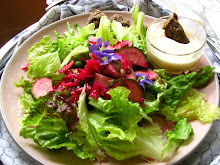
 A sweet and a lemony dressing accompany this lunch:
 All ingredients are local, when available, and ALWAYS organic or home-grown using organic methods.
 All ingredients are local, when available, and ALWAYS organic or home-grown using organic methods.